Dynamic Cable Systems in Irish Deepwater Floating Offshore Wind
The waters off Ireland’s west coast are generally over 180 meters deep and perennially affected by high-energy swells in the North Atlantic. The complex marine environment poses severe tests for the construction and operation of Floating Offshore Wind Farms (FOWF), becoming a core bottleneck restricting project implementation.
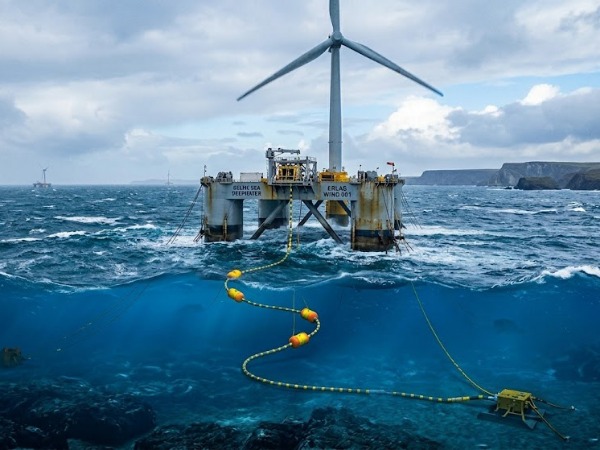
As a core transmission component of floating offshore wind power, dynamic cables are subsea power cables that float in the sea and move dynamically with floating offshore high-voltage substations and other equipment, as well as waves and tides.
Unlike traditional static power transmission cables, their design conditions differ significantly from the actual operating conditions of cables for floating offshore structures in the marine renewable energy sector. Cables for floating platform wind turbines must run through the water column from the bottom of the offshore platform to the Touch-Down Point (TDP) on the seabed. This special trajectory exposes them to long-term dynamic environmental forces.
Affected by platform motions and sea conditions, dynamic cables are subjected to higher levels of mechanical and electrical stress. Therefore, their structure must possess excellent resistance to repeated bending mechanical fatigue, and the design must ensure extremely high durability—this is also the core technical challenge urgently to be solved in Ireland’s deep-water floating offshore wind power project.
To address these stringent physical challenges, the Irish pilot project adopts a highly integrated auxiliary equipment protection system to specifically resolve issues of fatigue, abrasion, and over-bending of dynamic cables. The core technical applications of this system are analyzed in detail below.
Analysis of Core Technical Component Applications
1. Bending Stiffener – Core Component for Connection Point Fatigue Mitigation
On Ireland’s floating wind platforms, dynamic cables are routed from the bottom of the platform through I-tubes. As "hard connection" nodes, these areas experience the highest stress concentration and are prone to cable fatigue damage, directly impacting cable service life.
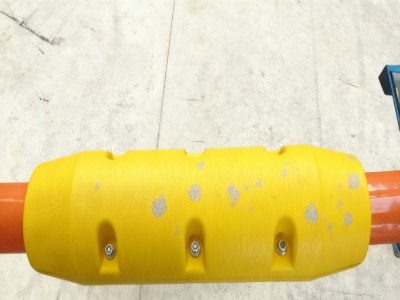
Core Function: Designed to withstand severe heave and pitch motions in the North Atlantic, the tapered polyurethane bending stiffener achieves a gradual stiffness transition from the rigid platform structure to the flexible cable. It effectively disperses stress at connection points, prevents fatigue cracks in cables at exit locations under repeated cyclic loads, extends cable service life at the source, and adapts to the extreme sea conditions in Ireland’s deep waters.
2. Bending Restrictor – Rigid Protection Device for Critical Locations
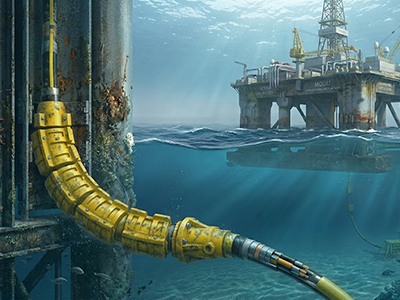
When dynamic cables transition from the suspended section to the seabed Touch-Down Point (TDP) or traverse uneven seabed terrain, they are vulnerable to "kinking" caused by current impacts. Particularly in Ireland’s rocky seabed areas, direct contact between cables and rocks can cause abrasion and further escalate damage risks.
Core Function: When cable bending reaches the preset Minimum Bending Radius (MBR), the interlocking half-shell bending restrictor automatically locks to form a rigid protective housing, effectively preventing cable over-bending. Meanwhile, in Ireland’s typical rocky seabed environments, it avoids direct friction between cables and seabed rocks, reduces abrasion, eliminates irreversible mechanical damage, and ensures stable power transmission.
Conclusion
Tailored for the special operating conditions of Ireland’s deep-water floating offshore wind power, this integrated dynamic cable protection system (combining bending stiffeners and bending restrictors) successfully resolves core issues such as dynamic cable fatigue, abrasion, and over-bending. It provides an efficient and reliable technical solution for deep-water floating offshore wind power projects in Ireland and globally.
For more integrated solutions of bending stiffeners, bending restrictors, and anchoring systems customized for the Irish offshore wind market, please contact our experts to obtain dedicated technical support and project-adapted solutions. Contact us!