Delivered to Thailand: Polyurethane Subsea Cable Bend Restrictors
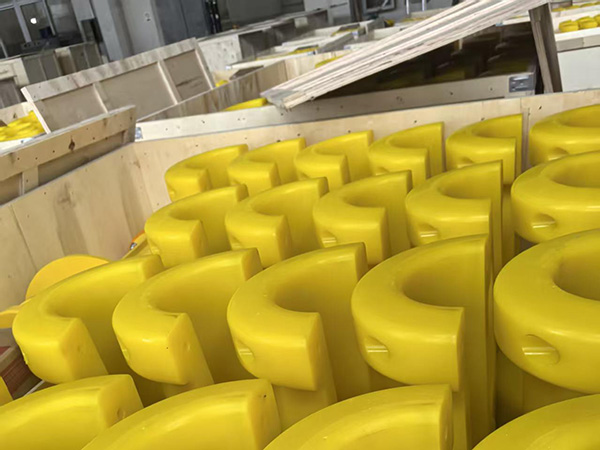
Recently, a large batch of high-performance Subsea Cable Bend Restrictors successfully completed factory acceptance testing (FAT) and customs clearance, and has officially been dispatched to Thailand. The delivery of these high-spec marine engineering protection equipment will significantly support the upgrading and construction of offshore energy and communication infrastructure in Southeast Asia.
Core Equipment Fortifying the Subsea "Lifeline"
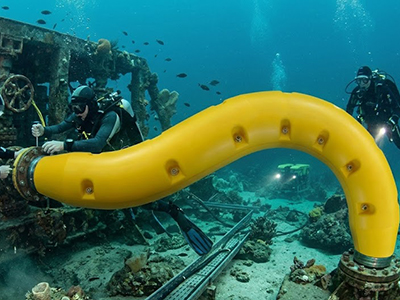
Subsea cables play a critical role in offshore engineering, bearing the heavy responsibility of power transmission and signal communication. Due to long-term exposure to complex ocean currents, tides, and marine vessel operations, these cables are highly vulnerable to damage from over-bending in the dynamic transition zones where they connect to offshore platforms, wind turbine foundations, or shore approaches.
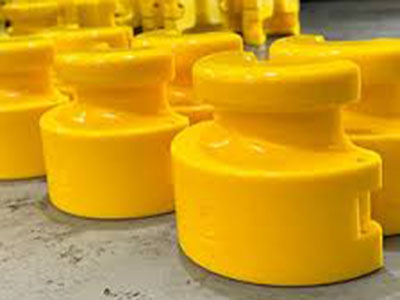
The bend restrictors shipped to Thailand are core protective devices specifically designed to safeguard subsea cables, fiber optic cables, and flexible pipelines. Manufactured from high-strength, seawater-corrosion-resistant engineered polymer materials, the products offer outstanding technical advantages:
1. Precision Limiting: Utilizing a unique interlocking modular design, they lock into a preset Minimum Bend Radius (MBR)when the cable is subjected to mechanical stress, fundamentally preventing fatigue failure caused by over-bending.
2. Extreme Environment Adaptation: Featuring excellent impact resistance, wear resistance, and anti-marine growth properties, they are engineered to withstand complex deep-sea and shallow-water intertidal environments, with a design lifespan exceeding 20 years.
Rigorous Quality Control Showcasing Manufacturing Excellence
As critical components in offshore engineering, the entire production process of this batch strictly adhered to mainstream international marine engineering standards, such as DNV specifications.
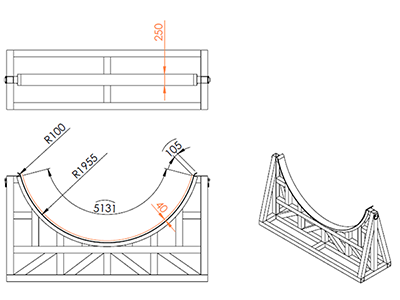
Prior to dispatch, the technical team conducted stringent lock-radius testing, bending stiffness testing, and simulated load fatigue trials. All performance indicators fully complied with the rigorous technical requirements of the Thai project stakeholders. The high-standard craftsmanship and rigorous quality control have made domestically produced marine attachments increasingly favored in international bidding, successfully winning full recognition from overseas developers and EPC contractors.
Riding the Wave of Southeast Asia's Marine Economy
In recent years, Thailand and the wider Southeast Asian region have experienced explosive growth in demand for offshore wind power, cross-island power interconnections, and subsea fiber optic networks. The continuous export of high-end marine engineering equipment and accessories is deeply integrating into the regional wave of blue economy development.
It is understood that this batch of bending restrictors is currently en route to the Thai project site via logistics channels. Moving forward, dedicated technical support teams will provide comprehensive installation guidance and remote technical services to ensure the smooth, on-schedule commissioning of the offshore project in Thailand.