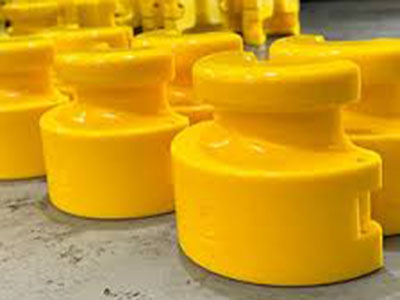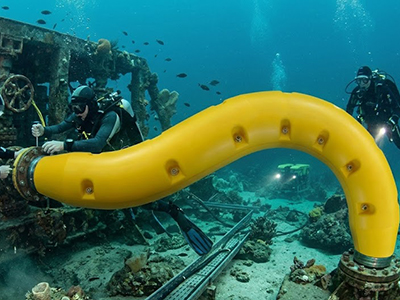
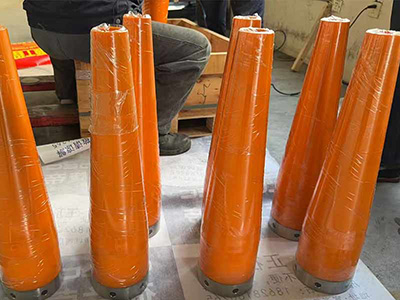
Bend stiffener for pipelays is a specialized, conical polyurethane device engineered to protect flexible subsea lines from over-bending and fatigue at critical connection points. While a standard bend stiffener functions by providing a localized increase in structural stiffness—gradually transferring bending moments to prevent kinking—a dedicated bend stiffener for pipelays is ruggedly optimized for the high-risk installation phase, absorbing the intense, dynamic stresses encountered as lines are reeled off vessels into deep water.
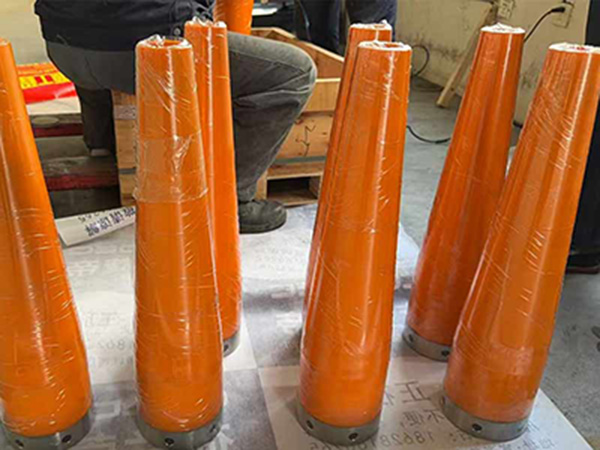
However, surviving these rigorous installation activities in unforgiving marine environments demands a material that can endure relentless mechanical and chemical stress. This is precisely why the choice of manufacturing material is so critical.
The Material Advantage of Polyurethane
The choice of material is crucial for subsea longevity. Polyurethane is universally preferred for manufacturing bend stiffeners due to its exceptional physical properties:
Tailored Flexural Stiffness: Polyurethane can be formulated to exact hardness and elasticity levels. This allows engineers to customize the deflection curve to match specific hydrodynamic loads and pipeline dimensions.
Outstanding Fatigue & Corrosion Resistance: Unlike metals, polyurethane does not corrode in seawater. It exhibits extreme resistance to hydrolytic degradation, microbial attack, and constant cyclic bending, ensuring decades of underwater performance.
Impact and Abrasion Protection: During the rugged pipelaying process, equipment frequently bumps against the vessel’s moonpool, stinger, or rollers. The high impact strength of polyurethane shields the inner flexible core from mechanical damage.
Core Applications of Bend Stiffeners in Subsea Infrastructure
High-performance urethane bend stiffeners are vital across various offshore sectors:
1. Oil & Gas Flexible Risers: They secure the vital connections between subsea production templates and Floating Production Storage and Offloading (FPSO) units, where wave action causes continuous movement.
2. Offshore Wind Farm Export Cables: They protect the dynamic subsea cables that channel electricity from floating wind turbines to offshore substations, absorbing the dynamic forces of the open ocean.
3. Umbilical Cable Systems: They safeguard the crucial hydraulic, electrical, and fiber-optic control lines that manage remote subsea valves, preventing signal or power loss.
As offshore projects push into deeper waters and harsher marine environments, the demand for reliable subsea protection equipment intensifies. Investing in a precision-engineered bend stiffener for pipelays is not just an operational precaution—it is a critical investment in asset integrity. Utilizing high-grade urethane bend stiffeners ensures that your flexible lines, risers, and subsea cables survive the rigorous installation process and deliver trouble-free operation throughout their design life.
Integrated vs. Split Bend Stiffeners: Which One Fits Your Subsea Project?
Integrated & Split Bend Stiffeners exhibit unique structural trade-offs in watertight sealing, installation methodologies, long-term fatigue life thresholds, and deepwater capability limits.