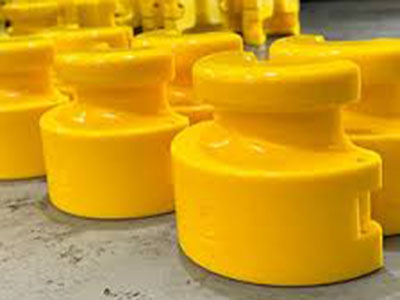
Subsea Pipeline Integrated Protection Systems in Chile
Offshore oil exploration in Chile faces extreme challenges driven by the subduction zone of the Pacific Plate: ultra-deepwater (exceeding 2,000 meters), steep seabed gradients, and the powerful Antarctic Circumpolar Currents. In this environment, the Flexible Risers and Umbilicals connecting Floating Production Storage and Offloading (FPSO) units to subsea wellheads must rely on a highly integrated suite of Ancillary Equipment to ensure structural integrity throughout their design life.
Core Protection Matrix
In a standard deepwater pipeline deployment, the Bend Restrictor (BR) is only one link in the defense chain.The professional division of labor and synergy between devices are as follows:
A. Bending Restrictors (BR)
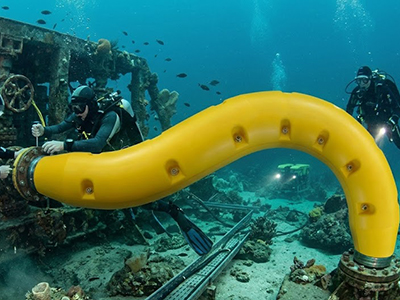
Core Function: Utilizes a modular interlocking structure to form a rigid arc once the pipeline reaches its Minimum Bend Radius (MBR).
Key Deployment: Primarily installed at static connection points, such as Subsea Xmas Tree inlets, Manifold interfaces, and both ends of Jumpers.
Professional Value: Provides a forced lock-out mechanism to prevent instantaneous kinking caused by seismic displacements or seabed landslides common in Chilean waters.
B. Bending Stiffeners
Technical Form: A long, conical elastomer cast from high-performance polyurethane.
Deployment Logic: Installed at the I/J-tube exits at the base of the FPSO.
Synergy: Unlike the "hard lock" of the BR, the stiffener provides progressive stiffness. It addresses the millions of low-amplitude oscillations caused by year-round swells, serving as the primary defense against fatigue failure at the pipeline's hang-off point.
C. Distributed Buoyancy Modules (DBM)
Engineering Purpose: Installed at specific intervals to configure the pipeline into a Lazy Wave geometry.
Deepwater Significance: The upward lift provided by the modules offsets the self-weight of the deepwater riser, creating a buffered arc in the water column. This configuration effectively absorbs the violent vessel offsets during storms, reducing the stress loads transmitted to the seabed restrictors.
D. Cable Protection Systems (CPS)
Application Scenarios: Specifically designed for power and fiber-optic cables, particularly where lines traverse rocky seabed zones or enter subsea structure apertures.
Integrated Functionality: CPS typically integrates bending restriction with anti-scour and anti-abrasion features, ensuring fragile signal lines are not compromised by the complex bottom currents of the Chilean Trench.
Environmental Adaptability and Material Science
In the high-salinity, high-pressure, and low-temperature deepwater environments of Chile, all equipment follows strict material protocols:
Polyurethane: Used as the primary material for its superior hydrolytic stability and fatigue resistance.
Anti-Creep Design: Internal buoyancy elements typically utilize Syntactic Foam to ensure no volume collapse under extreme hydrostatic pressure, maintaining constant buoyancy.
Corrosion-Resistant Fasteners: All locking bolts and clamps must be made of Titanium alloys or Super Duplex stainless steel to resist decades of electrochemical corrosion.
Installation and Practice
A complete protection scheme also includes auxiliary products for the installation phase:
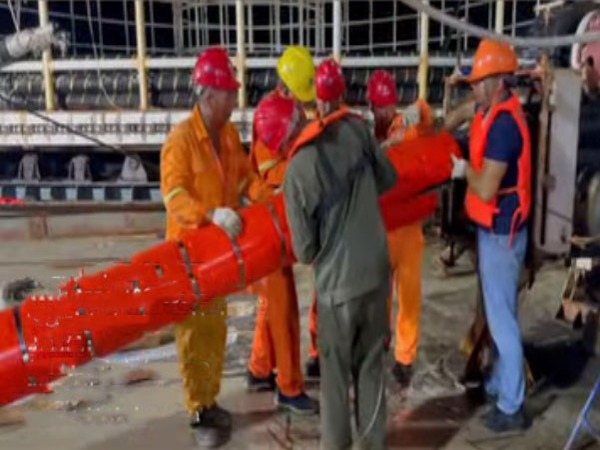
Pulling Heads: Used during deployment via Vertical Lay Vessels (VLS) to bear the full installation tension while maintaining internal seals.
Abrasion Shields: Installed at the Touchdown Zone (TDZ) to prevent wear caused by the repetitive friction between the pipeline and the seabed.
Conclusion
In the design of deepwater oil and gas projects in Chile, bend restrictors, stiffeners, buoyancy systems, and cable protection systems form an indivisible whole. This design philosophy—combining rigidity with flexibility and balancing dynamic response with static stability—is the fundamental guarantee for deepwater engineering to withstand the formidable forces of nature. Contact us!