How to Choose the Right Subsea Bend Restrictor
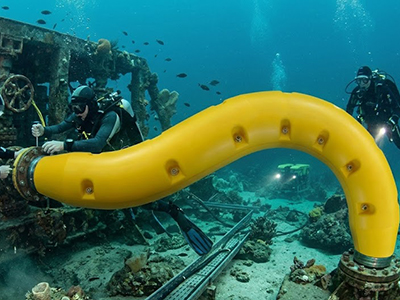
In offshore and marine engineering, safeguarding critical undersea infrastructure from over-bending is a top priority. Whether dealing with power cables or complex umbilicals, a vertebrae bend restrictor has become the industry standard to prevent structural failure caused by dynamic ocean currents and installation stresses.
However, selecting the perfect system requires a deep understanding of both application environments and technical parameters. This guide outlines the essential steps to choosing the right system for your bend restrictors subsea projects.
Identify Your Application: Hose, Cable, or Umbilical?
The very first step in selection is defining exactly what the system will protect. Different flexible lines carry different media and require unique mechanical support:
1. Hose Bend Restrictor: Industrial hoses, high-pressure hydraulic lines, and oil & gas flowlines experience internal pressure fluctuations and external current forces. A proper bend restrictor hose setup prevents localized kinking near the end terminations (couplings or flanges), which is the most common cause of premature hose bursting and fluid leaks.
2. Cable Bend Restrictor: Traditional subsea power and fiber-optic cables require reliable, consistent protection to safeguard sensitive internal copper conductors and optical fibers from sharp bending angles and structural failure.
3. Umbilical Bend Restrictor: Umbilicals carry a complex, heavy mix of hydraulic lines, chemical injection tubes, and electrical cables. Because they act as the lifeline for subsea production systems, the restrictors used here must withstand significantly higher mechanical loads and dynamic marine stresses.
Match the Locking Radius to the Minimum Bend Radius (MBR)
The most critical technical specification of a vertebrae bend restrictor is its locking radius.
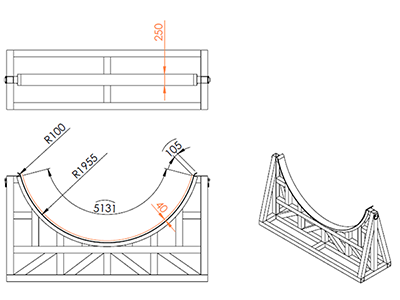
Unlike bend stiffeners, which provide continuous, flexible support, these interlocking joint systems allow movement up to a pre-engineered limit, at which point they mechanically lock to form a rigid, curved structure. The engineered locking radius of the restrictor must always be equal to or slightly larger than the manufacturer-specified Minimum Bend Radius (MBR) of your subsea cable or umbilical. Choosing an incorrect locking radius will either allow the line to over-bend—leading to catastrophic component failure—or apply unnecessary stress to the entire assembly.
Evaluate Material Performance: Why Polyurethane?
The marine environment is incredibly harsh, involving hyperbaric deepwater pressure, UV exposure during deployment, and continuous seawater exposure. Therefore, reviewing polyurethane bend restrictor specifications is vital. When evaluating suppliers, look for high-grade, custom elastomer formulations that offer:
1. Excellent Hydrolytic Stability: This ensures the polyurethane does not degrade or weaken when submerged in seawater for decades.
2. Corrosion and Marine Growth Resistance: High-quality polyurethane resists offshore corrosion and prevents severe marine biofouling (like barnacles or algae growth) from compromising the joint movement.
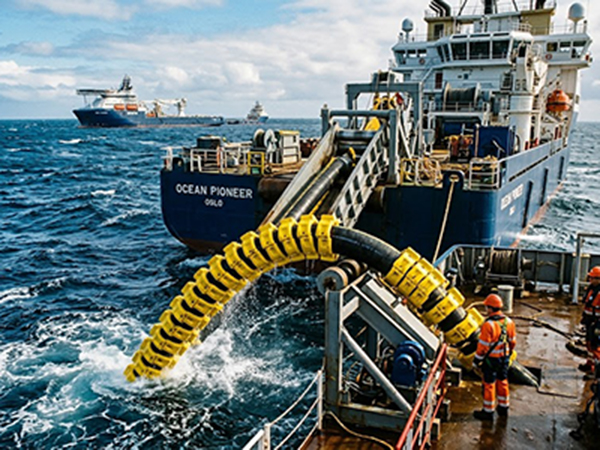
3. High Impact and Tear Strength: The material must withstand the rigorous impact forces during overboarding and deployment via vessel chutes.
Plan for Efficient On-Deck Bend Restrictor Installation
A factor that is frequently overlooked during procurement is the ease of bend restrictor installation out at sea. Vessel time is incredibly expensive, and delays during deployment can derail project budgets.
When selecting a manufacturer, look for a user-friendly, bolted split-design. A well-designed bend restrictor installation setup allows technicians on deck to quickly bolt the interlocking half-shells around the cable or umbilical without requiring specialized, time-consuming tools.
Conclusion: Partner with a Custom Polyurethane Expert
Selecting the ideal protection system for your subsea project is not a one-size-fits-all process. Every marine layout requires tailored calculations regarding locking radius, material hardness, and custom dimensions.
Are you looking for a tailored protection solution for your next offshore project? As an experienced custom polyurethane manufacturer, we provide robust, high-performance cable and umbilical protection systems tailored to your exact technical criteria.