• By Philson
  • 610 Hits
  • 26-Nov,2025

Bend Stiffener for Wind And Petroleum

In the critical process of global energy structure transformation, wind energy, as a core pillar of clean energy, and petroleum, as an important cornerstone of traditional energy, jointly undertake the strategic mission of improving energy utilization efficiency and ensuring energy supply security. In the complex engineering systems of these two industries, bend stiffeners, as key structural components, directly affect the operational stability and service life of core equipment. This paper focuses on polyurethane bend stiffeners, systematically expounds their material properties, and deeply analyzes their application scenarios and core values in the wind energy and petroleum industries.

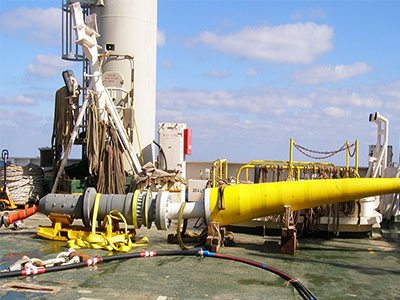
Bend stiffener for wind industries

Analysis of Material Properties of Polyurethane Bend Stiffeners

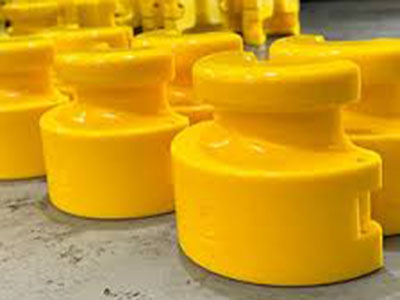
Industrial bend stiffeners have strict requirements for mechanical properties and corrosion resistance, and polyurethane materials have become the preferred material in this field due to their unique performance advantages. Their core characteristics are mainly reflected in two aspects: first, excellent mechanical adaptability. Polyurethane materials have the dual advantages of low Young's modulus and high elongation at break, which can not only meet the structural requirements for bending deformation adaptability but also provide reliable mechanical support; second, strict standard compliance. The American Petroleum Institute (API) standards have formulated strict specifications for key indicators such as tensile strength of materials for bend stiffeners. Through precise formula design and process control, polyurethane materials can stably meet the requirements of this standard, ensuring performance stability under long-term high-stress working conditions.

Application and Value Realization in the Wind Energy Industry

Offshore wind power is the mainstream direction of wind energy development, and its power transmission highly depends on the submarine cable system. Bend stiffeners are core protective components to ensure the safe operation of submarine cables, mainly playing a role by constructing a sound submarine cable protection system.

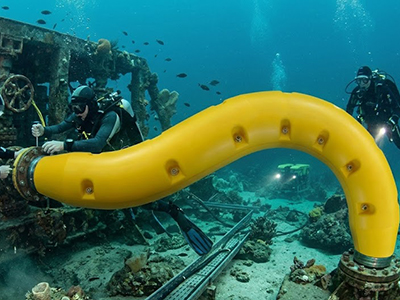
Submarine cables of offshore wind farms serve in complex marine environments for a long time, facing multiple risks such as seawater corrosion, ocean current impact, ship anchoring, and seabed terrain friction, and are prone to structural damages such as wear and fatigue cracking. Aiming at this pain point, polyurethane bend stiffeners achieve protection through the following mechanisms: first, at the material level, high-performance polyurethane elastomers are adopted. This material not only has excellent marine corrosion resistance but also can absorb external impact energy through its own elastic deformation, reducing the accumulation of fatigue damage; second, at the structural level, it fits closely with the cable through optimized design, effectively improving the bending strength of the cable, restricting its excessive bending during installation and operation, and avoiding insulation layer damage caused by concentrated bending stress. This dual effect of "material protection + structural reinforcement" greatly improves the operational safety of submarine cables and provides key support for the stable power supply of offshore wind farms.

Application and Function Embodiment in the Petroleum Industry

The entire industrial chain of petroleum exploration, exploitation, and transportation is inseparable from submarine cable and pipeline systems. The connection nodes of these systems are mechanical weak links, and bend stiffeners have become important supports for ensuring system safety by strengthening key connection parts.

In the submarine operation system of petroleum platforms, the connection nodes of cables and pipelines bear dynamic loads caused by ocean currents and waves for a long time, and are prone to dynamic fatigue failure and excessive bending damage. Especially in the transition area between rigid nodes and flexible pipelines, the problem of stress concentration is more prominent. The application of polyurethane bend stiffeners effectively solves this problem: by setting a customized reinforcement structure at the connection node, the bending stiffness of this part is accurately improved, making the stress distribution more uniform; at the same time, its excellent fatigue resistance can effectively delay the damage accumulation under dynamic loads, significantly improving the bending resistance and fatigue life of the node. In key scenarios such as the connection between dynamic cables and rigid platforms and the butt joint of submarine pipelines, the protective effect of this component is particularly significant, directly reducing the risk of safety accidents such as oil leakage and power failure caused by the failure of connection nodes, and providing important support for the safety of deep-sea operations in the petroleum industry.

Conclusion

The application of bend stiffeners in the wind energy and petroleum industries is essentially the realization of engineering value upgrading through the collaborative innovation of materials science and structural design. By selecting polyurethane, a high-performance material, and combining with the characteristics of industry working conditions for customized design, this component not only fundamentally improves the operational safety and reliability of core equipment such as submarine cables and pipelines but also optimizes the full-life cycle benefits of the engineering system by extending the service life of equipment and reducing maintenance costs. Against the background of the energy industry's transformation towards deep-sea and high-end development, the material upgrading and structural innovation of bend stiffeners will provide more solid technical support for the safe and efficient development of the two industries.