In the grand blueprint of offshore wind energy, Array Cables act as the vital "neural network"—efficiently collecting raw power from individual wind turbines and channeling it to the offshore substation. While these cables may have smaller diameters than the massive Export Cables, they operate in the most turbulent and dynamic zones of the wind farm.
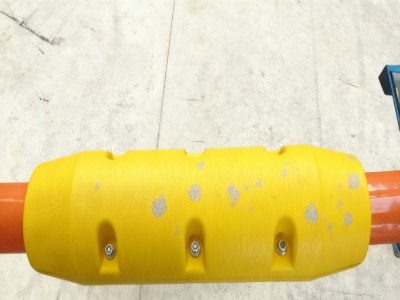
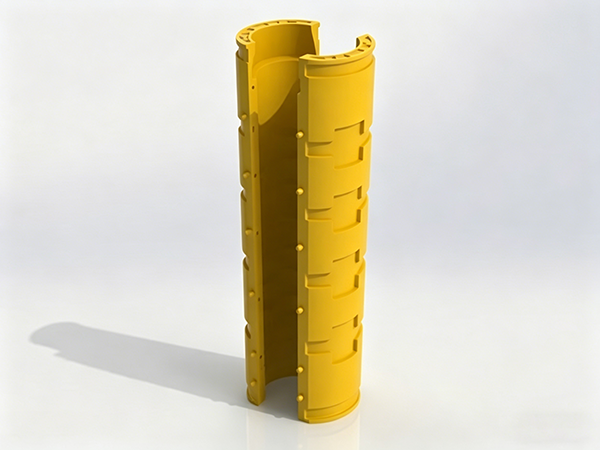
To ensure the long-term asset integrity and wind farm availability, a specialized protection strategy is required. This is where polyurethane (pu) cable protector sleeves demonstrate their unparalleled engineering value.
The Dynamic Challenge of Array Cable Protection
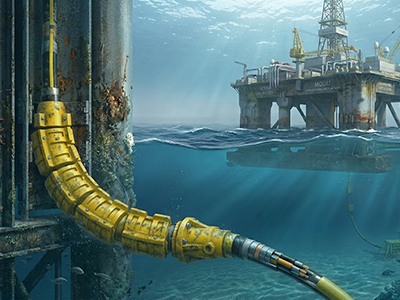
Unlike their relatively static counterparts—the Export Cables—Array Cables are subjected to a high-frequency Dynamic Loading environment. Located primarily in the vicinity of turbine foundations (J-tubes or I-tubes), these cables face constant threats:
1. Cyclic Bending Stresses: Constant wave and current action induce repetitive movement at the cable interfaces.
2. Vortex-Induced Vibrations (VIV): High-velocity currents can cause high-frequency oscillations, leading to premature material fatigue.
3. Seabed Touchdown Point (TDP) Stress: The interface where the cable transitions from the water column to the seabed is a high-risk zone for over-bending and abrasion.
Beyond Plastics: The Science of High-Performance Polymers
While many providers offer generic "plastic" guards, the harsh reality of deep-sea environments demands a more sophisticated material: Polyurethane.
As a high-performance Block Copolymer, Polyurethane is uniquely engineered at the molecular level. Our Polyurethane Cable Protector Sleeves leverage this molecular architecture to provide:
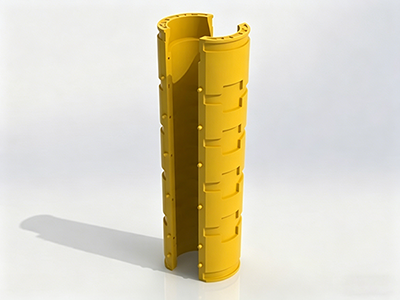
1. Precision Bending Radius Limitation: The core function of an array cable protector is to prevent the cable from bending beyond its Minimum Bending Radius (MBR). Our sleeves utilize a precision-engineered Interlocking Articulated Structure. This design creates a "mechanical stop" that ensures the cable remains within safe geometric limits, even under extreme hydrodynamic loading.
2. Superior Fatigue Resistance: Array cables move millions of times over their 25-year design life. Standard commodity plastics eventually suffer from embrittlement and cracking. In contrast, our Marine-Grade Polyurethane possesses an exceptional "memory" effect and low compression set, allowing the sleeve to absorb energy and return to its original shape without structural degradation.
3. Impact & Abrasion Armor: The area around the turbine foundation is often a "scour zone" filled with shifting sediments and debris. The extreme Shore Hardness of our PU sleeves (typically 90A-95A) provides a shield that is tougher than rubber yet more resilient than metal, successfully resisting rock abrasion and accidental impacts from fishing gear.
Targeted Application: From J-Tube to Touchdown
Our customized solutions are specifically designed for the most vulnerable segments of the array network:
1. J-Tube / I-Tube Exits: Facilitating a smooth stress transition from rigid foundation structures to the dynamic sea.
2. Seabed Touchdown Points (TDP): Guarding against the friction and "pounding" effect of the cable at the seabed interface.
3. Free-Span Protection: Providing the necessary ballast and stiffness to stabilize the cable in undulating seabed terrains.
Conclusion: Safeguarding Offshore Assets
In the offshore wind industry, cable integrity equals wind farm availability. By choosing Polyurethane Cable Protector Sleeves for Array Cables, developers and EPC contractors are not just buying "protection"—they are investing in a molecularly-engineered insurance policy against unplanned downtime and costly subsea repairs.