In subsea engineering, offshore wind, and oil & gas infrastructure, static loads pose a critical threat to cable longevity. Without mechanical protection, long-term continuous stress at fixed boundary points causes stress concentration, material creep, and cable failure. Cable Bend Restrictors provide the primary mechanical defense system designed specifically for static load protection.
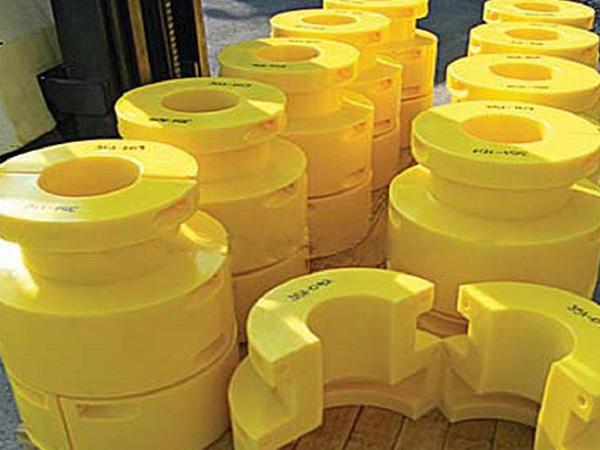
Target Application Zones for Bend Restrictors
Static loads occur where cables face permanent, continuous gravitational or environmental forces without relative motion:
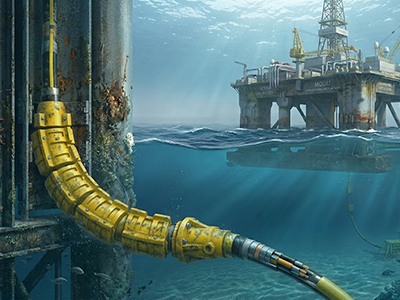
J-Tube Outlets: Bearing the continuous hanging weight of the cable at platform or foundation exits.
Cable Landfall Areas: Experiencing stable, unidirectional current forces during shore transitions.
Seabed Span Crossings: Bearing permanent bending stress over trenches or uneven seabed topography.
How Bend Restrictors Protect Against Static Loads
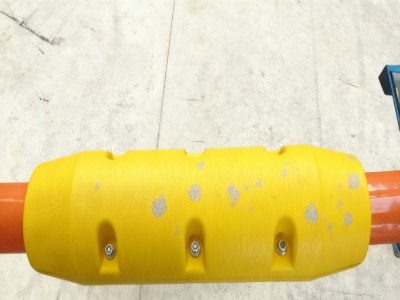
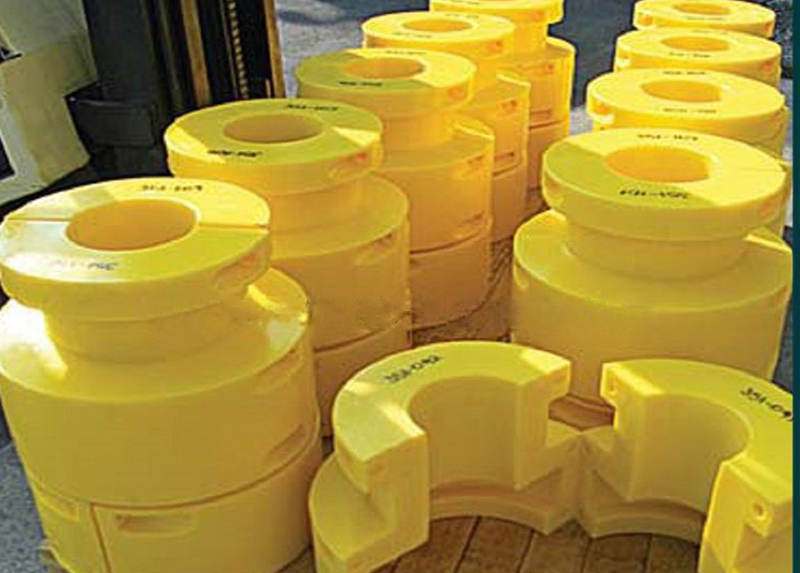
Engineered from high-grade polyurethane elastomers, Cable Bend Restrictors utilize a modular, interlocking design to neutralize static mechanical stress through two functions:
Mechanical Radius Control: Under bending stress, the polyurethane segments mechanically lock together at a predetermined radius. This limit is strictly configured to be larger than the cable's Minimum Bending Radius (MBR), physically preventing over-bending.
Structural Stress Transfer: Once locked, the modules form a rigid, load-bearing pipe structure. The continuous static load (such as the hanging weight) is transferred from the internal cable components to the high-strength polyurethane casing.
Conclusion
Deploying precisely engineered Cable Bend Restrictors eliminates localized stress concentrations at critical fixed boundary points. This ensures the structural integrity of the subsea cable remains uncompromised by continuous gravitational and environmental loads, reducing long-term maintenance costs and operational downtime.
Why is Static Load Protection Critical for Subsea Cables, and How Do Bend Restrictors Achieve It?
A technical breakdown addressing the necessity of zero-wave cable protection, mechanical interlocking responses to temporary dynamic stress, and the rigorous FEA engineering criteria for deep-sea deployment.