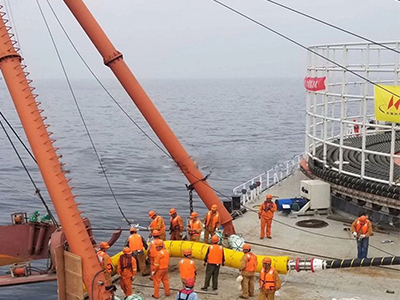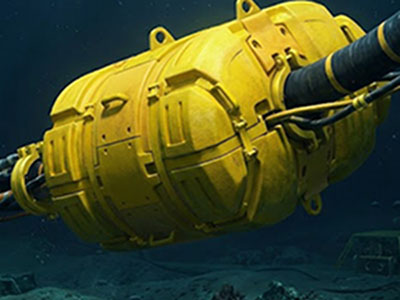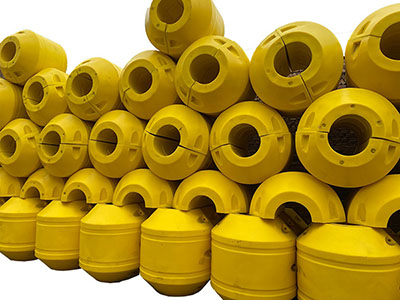
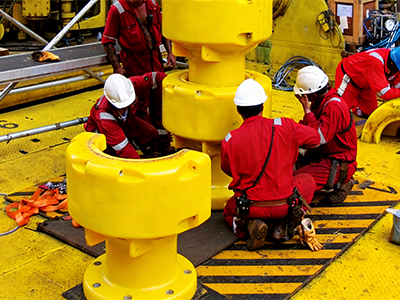
Bend restrictors offer targeted protection for static subsea interfaces by mechanically locking together to prevent pipe damage. Ideal for umbilical and flowline connections at J-tubes or PLETs, these polyurethane units differ from bend stiffeners by activating only when the pipe reaches its maximum safe curvature. This ensures high-performance protection against over-bending without applying constant stress to the line.
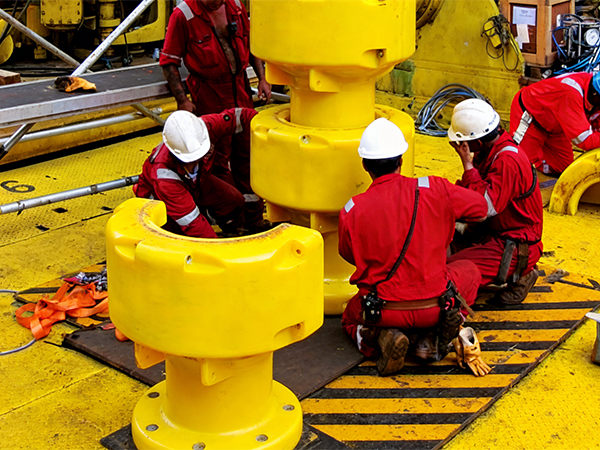
Key Features
1. Mechanical Interlocking Mechanism
Each individual restrictor unit features a specific geometric design. When the pipeline reaches its pre-set Minimum Bend Radius (MBR) , the units automatically interlock. This lock-up effectively absorbs excess bending moments, ensuring that high-value cables or umbilicals are protected from fatigue failure or structural damage caused by curvature overload.
2. High-Performance Rigid Structural Polyurethane
Compared to traditional metallic materials, polyurethane offers superior marine environment adaptability. It is highly resistant to marine growth (biofouling) and provides an exceptionally long service life in deep-sea conditions. Furthermore, while maintaining high structural integrity, the polyurethane material significantly reduces the self-weight pressure on subsea structures.
3. Static Application Specialist
Unlike bend stiffeners, which are designed for continuous dynamic loading, bend restrictors are specifically engineered for static connection points (such as wellheads, J-tube exits, and PLETs). They provide passive intervention, engaging only when the pipeline is subjected to external forces like ocean currents or displacement that cause over-bending. This ensures that no additional pre-stress is applied to the pipeline during normal conditions.
Design Analysis Requirements
Category | Design Parameter |
Pipe Geometry | Flexible pipe Outside Diameter (OD) & Minimum Bend Radius (MBR) |
Mechanical Loads | Shear force and bending moments (Installation & Operation) |
Thermal Data | Min/Max internal pipe temperatures & seawater operation temperatures |
Environmental | Min/Max installation air temperature & thermal conductivity (if heated) |
Project Scope | Required service life & length of coverage (by angle or distance) |
Structural | Support structure details & pipe stiffness (if not included in load data) |
Ready to Secure Your Subsea Connections?
Don’t risk over-bending or fatigue failure in your flexible lines. Our API 17L-certified bend restrictors provide the reliable, passive protection your project demands. Contact Us for a Custom Quote