How to Prevent Subsea Cable Failure: Vertebrae Bend Restrictors
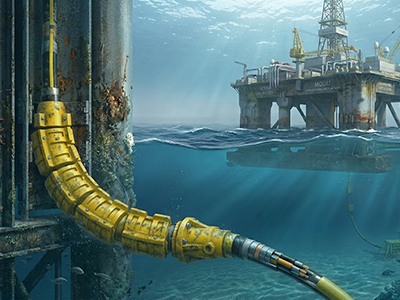
In harsh offshore environments, subsea power cables, umbilicals, and flexible risers are constantly exposed to brutal waves and currents. The critical danger zone occurs where these flexible lines connect to rigid structures (like wind turbine foundations, wellheads, or sea floor PLETs)—the severe structural stress at these joints causes immediate over-bending, kinking, and costly cable failure.
The Engineered Solution: How Polyurethane VBRs Fix This
To solve this structural vulnerability, engineers install a Polyurethane Vertebrae Bend Restrictor (VBR) directly at the connection interface. It resolves the failure risk through a clever mechanical design:
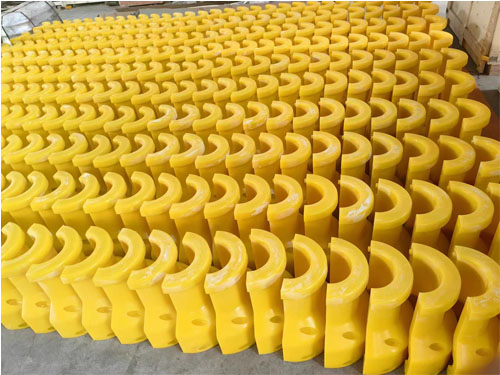
Mechanical Locking Matrix: Made of interlocking, split-body elements, the VBR wraps around the cable like a spine. Under normal sea currents, it flexes smoothly.
The Lock Mechanism (The Ultimate Protection): The moment high waves or mechanical loads try to bend the cable past its safe limit, the interlocking segments automatically lock together into a rigid, solid arch. This completely blocks further bending, transferring the deadly stress away from the cable and onto the heavy-duty structural connector.
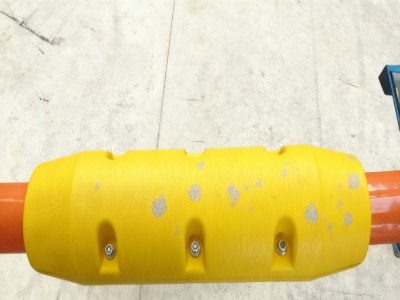
Rapid Bolt-On Installation: The split-body design means it bolts together fast on the vessel deck. This eliminates complex underwater assembly, drastically lowering installation time and vessel costs.
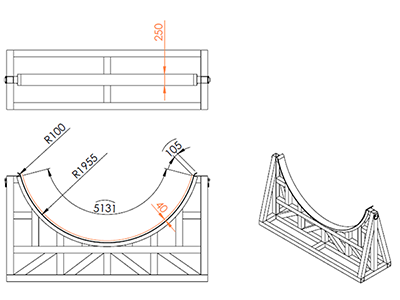
Need Technical Specs or Custom Drawings?
As a specialized China-based OEM manufacturer, Philson designs custom marine bend restrictors tailored to your exact cable diameters and project parameters.