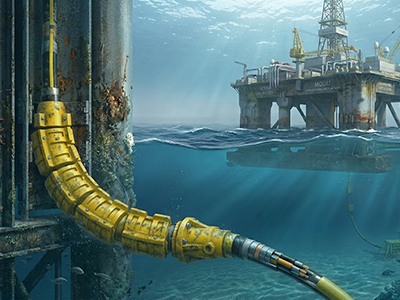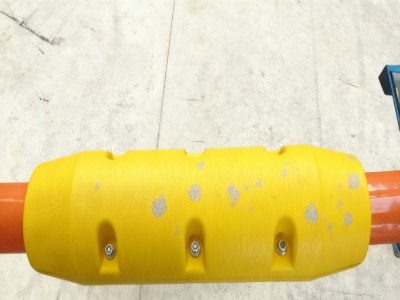
In subsea cable protection systems, Interlocking Polyurethane Bend Restrictors are indispensable components. Specifically engineered to manage excessive bending and mechanical stress at critical transition points, these restrictors feature a durable interlocking structure. They are widely utilized in offshore wind farms, oil and gas fields, and marine renewable energy projects to significantly extend the operational lifespan of power and communication cables.
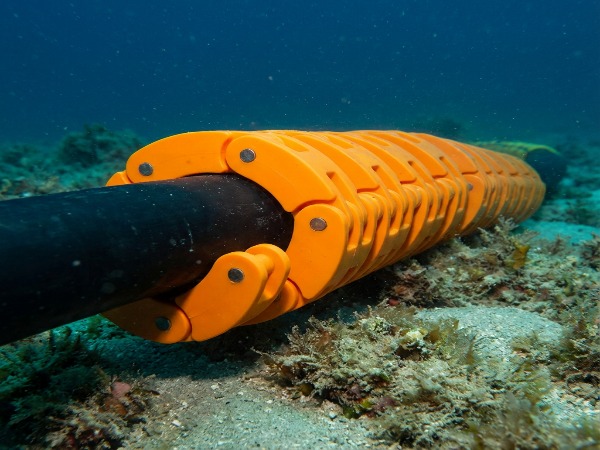
What is a Polyurethane Bend Restrictor?
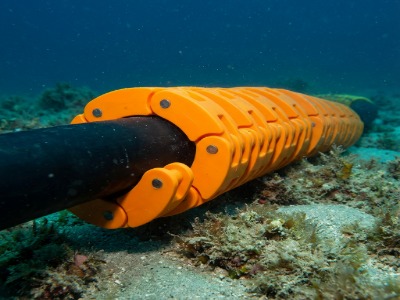
A bend restrictor is a modular assembly crafted from high-performance, marine-grade polyurethane. Its unique "vertebrae" interlocking design allows the cable to move flexibly within a safe range while establishing a physical limit to maintain the Minimum Bend Radius (MBR).
Core Function: To prevent kinking, cracking, or fatigue damage, especially where cables exit J-tubes, traverse uneven seabeds, or interface with hang-off systems.
Key Technical Advantages
Feature | Technical Value |
High Strength & Durability | Made from abrasion-resistant and corrosion-resistant premium polyurethane, maintaining stable mechanical performance in extreme deep-sea environments. |
Interlocking Segment Design | Modular, symmetrical segments ensure uniform load distribution and allow for precise adaptation to various cable diameters. |
Flexible Customization | Supports various specifications to meet specific project requirements. |
Simplified Installation | The "snap-together" interlocking structure drastically reduces offshore installation complexity, saving both vessel time and labor costs. |
Ultra-Long Service Life | Designed for an operational life of over 25 years with virtually zero maintenance required during service. |
Typical Application Scenarios
This system provides full-lifecycle protection for subsea infrastructure, primarily used in:
Stress protection for subsea power and fiber optic cables.
Cable transition zones in offshore wind farms.
Umbilical protection for floating and fixed oil and gas platforms.
J-tube cable exit points.
Touchdown areas on the seabed to prevent abrasion.
Summary
Interlocking Polyurethane Bend Restrictors perfectly combine mechanical reliability, environmental resistance, and installation efficiency. Whether protecting export cables for offshore wind or umbilicals in deep-water energy fields, this solution ensures that subsea infrastructure remains secure, efficient, and stable throughout its operational life.