Bend Restrictor for 35kV Submarine Cables Exported to Vietnam Nearshore Wind Farms
Customer Background
In recent years, Vietnam has experienced rapid expansion in renewable energy, particularly focusing on nearshore wind power developments along its extensive coastline and shallow coastal waters, such as the Mekong Delta and southern provincial waters. A major regional EPC contractor and offshore wind developer was executing a critical 35 kV subsea power distribution project, connecting array cables from offshore wind turbine generators to substation platforms.
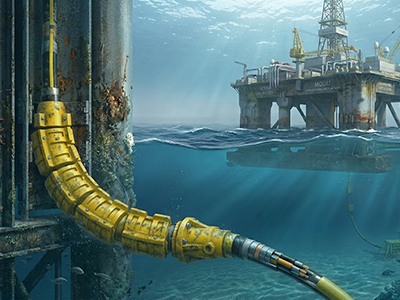
Operating in shallow nearshore waters exposed the subsea infrastructure to severe environmental hazards, including intense wave-current loading, significant seasonal tidal variations, and aggressive seabed scour. These dynamic forces created high-risk bending fatigue points where submarine cables entered the turbine foundation J-tubes and bell-mouths, threatening the long-term reliability and structural integrity of the electrical transmission network.
Customer Requirements
To withstand the harsh tropical marine environment and meet stringent international offshore engineering standards, the client issued a comprehensive technical specification for the cable protection system. As an experienced manufacturer of high-performance polyurethane (PU) subsea protection products, we partnered with the project team to meet the following precise mechanical and material criteria:
Cable Compatibility: The polyurethane bend restrictor and centralizer assembly had to be custom-molded to fit a 35 kV 3C185 mm² three-core submarine cable perfectly, ensuring exact dimensional and mechanical engagement.
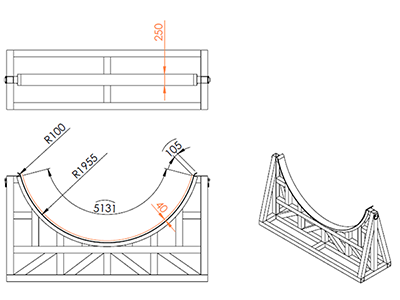
Minimum Bending Radius (MBR): The system required a free-locking MBR of 3.45 m to strictly limit dynamic cable bending beyond safe operational thresholds during severe weather.
Mechanical Stiffness & Load Bearing: The bending stiffness had to be maintained at or above 100.9 kNm, with a maximum allowable bend moment of 35.36 kNm and an ultimate/fracture moment capacity of 45 kNm to survive 100-year storm conditions.
Material Durability & Compliance: The polyurethane formulation required exceptional resistance to seawater, UV radiation, biological marine aging, and long-term chemical hydrolysis, backed by type-test evidence, destructive bend test reports, and material certificates.
Engineering Solutions & Implementation
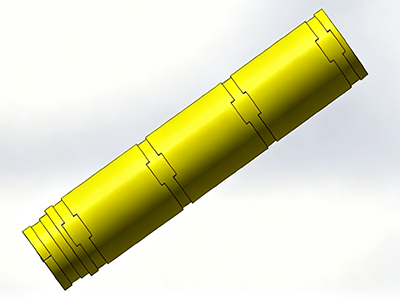
Custom Polyurethane Formulation & Modular Architecture: Leveraging our advanced casting expertise in polyurethane (PU), we engineered a high-performance modular bend restrictor system tailored specifically for Vietnam's shallow water conditions.
Specialized Marine Polyurethane Casting: We utilized a custom-formulated, high-density polyurethane elastomer known for its superior impact resistance, abrasion resistance, and long-term resistance to seawater hydrolysis and ultraviolet (UV) degradation, ensuring a 25+ year operational lifespan.
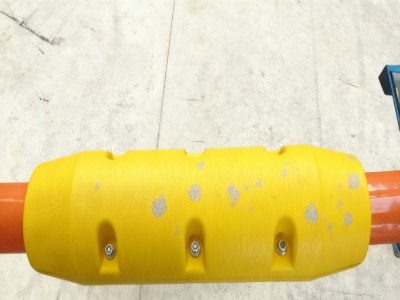
Section-by-Section Interlocking Assembly: The polyurethane segments were designed with precision-interlocking geometry and installed section-by-section along the critical transition zones. Each segment was secured using high-strength structural bolts featuring a comprehensive multi-tier retention setup: double flat washers, double spring washers, lock nuts (or slotted nuts), and heavy-duty locking pins to completely eliminate component loosening under continuous wave-induced vibrations.
Seamless J-Tube & Bell-Mouth Integration: The protection assembly was custom-profiled to interface smoothly with centralizers, J-tubes, and bell-mouth structures, eliminating localized stress concentration points.
Full Quality Traceability: Delivered an exhaustive technical dossier including type-test reports, destructive bend test validation data, raw material compliance certificates, and detailed installation manuals.
Project Results & Value
Zero Cable Fatigue Failures: The polyurethane interlocking segments successfully restricted cable curvature to the specified 3.45 m MBR threshold, completely protecting the 35 kV 3C185 submarine cables from overbending during intense monsoonal wave actions and tidal shifts.
Superior Marine Longevity: The hydrolysis-resistant polyurethane material, combined with the fail-safe double-washer and locking pin mechanism, provided robust, maintenance-free operation in corrosive tropical marine environments.
Streamlined Regulatory Approval: Full compliance documentation, including destructive bend test evidence and material certificates, enabled the EPC contractor to pass local regulatory inspections and project handover milestones ahead of schedule.
Custom Manufacturing Capabilities
As a specialized manufacturer of high-performance polyurethane (PU) subsea and industrial engineering solutions, our company offers comprehensive custom design and manufacturing services tailored to unique project requirements worldwide. Whether you need custom MBR ratings, specialized bending stiffness, unique cable dimensions, or tailor-made interface hardware (such as centralizers, J-tubes, and bell-mouths), our engineering team provides end-to-end support—from material formulation and 3D prototyping to rigorous type testing and global delivery. Contact us today to discuss your specific subsea protection challenges.