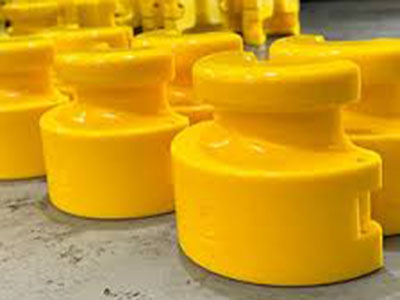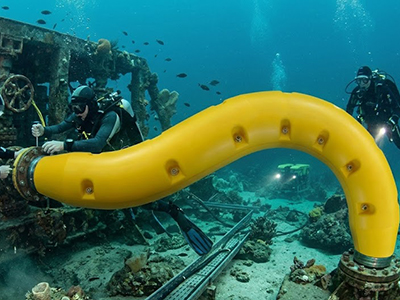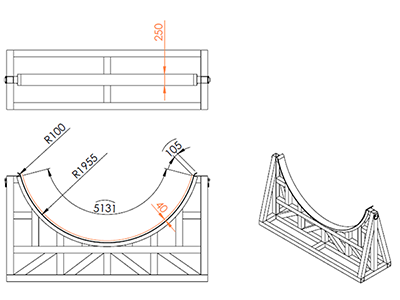
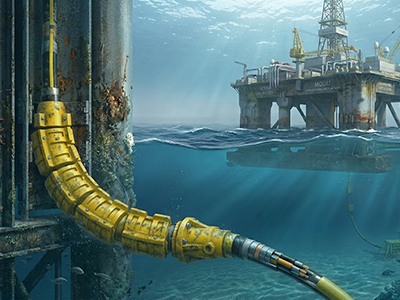
Bend Restrictor is a mechanical device typically composed of a series of interlocking semi-circular elements. Installed on the outer layer of cables, hoses, or umbilicals, it is primarily designed for static or quasi-static subsea applications.
Its core function is to establish a Minimum Bend Radius (MBR). When ocean currents or mechanical loads attempt to bend the line further, the interlocking elements of the restrictor mechanically lock together to form a rigid structure. This effectively prevents the conduit from bending beyond its structural endurance limit, shielding the internal components from damage.
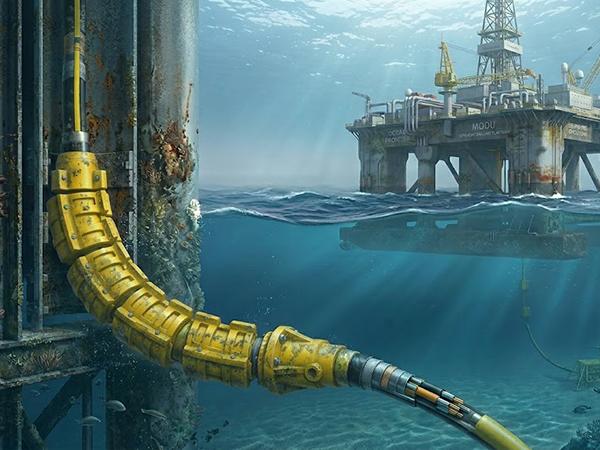
Critical Role Across Offshore Drilling Units (MODUs)
The offshore operational environment is extremely hostile, whether for a Jack-up Rig in shallow waters or a Semi-submersible Rig and Drillship in the deep ocean. Mobile Offshore Drilling Units (MODUs) rely on bend restrictors to address several critical challenges:
1. Prevention of Fatigue Failure: Constant exposure to cyclic wave action makes cable connection points highly susceptible to fatigue cracking over time.
2. Protection of Critical Interfaces: The connection points where cables enter the Offshore Platform or the Subsea Tree are areas of maximum stress concentration. Restrictors alleviate the shear forces generated at these "hard-to-flexible" transitions.
3. Weathering Extreme Conditions: During storms or high-current events, the displacement of the Drilling Rig increases. The bend restrictor serves as the final line of defense against catastrophic cable snapping.
Key Materials and Characteristics
Given the harsh nature of marine environments—characterized by high pressure, high salinity, and chemical corrosion—these protectors are typically manufactured from:
1. High-Grade Polyurethane: The most prevalent material for Offshore Installations, offering exceptional wear resistance, impact strength, and inherent buoyancy.
2. Structural or Stainless Steel: Specifically utilized for ultra-deepwater projects or sections of the Production Platform subjected to extreme mechanical loads.
Conclusion
In modern subsea engineering, as operations move into deeper and more remote waters, the demand for robust protection has never been higher. While a bend restrictor may appear simple, it is a vital safeguard for ensuring the operational integrity of the Offshore Rig, preventing environmental disasters like oil spills, and avoiding costly non-productive time (NPT). It is the essential "exoskeleton" that marine engineers wrap around expensive subsea assets to withstand the formidable forces of the deep.