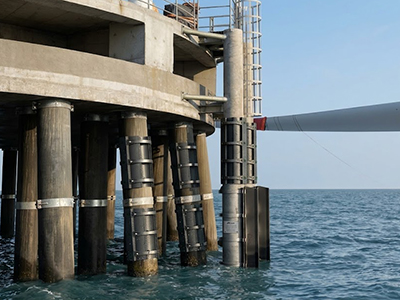
In the operations and maintenance (O&M) of offshore wind monopile foundations, traditional protection solutions for Boat Landing systems face two chronic headaches: first, metallic fasteners corrode easily and rubber elements age rapidly, driving up underwater O&M costs and downtime losses; second, under relentless wave action, tidal shear, and the continuous pushing forces of Crew Transfer Vessels (CTVs), conventional protection components are highly prone to fracturing and detaching, exposing the monopile structure and vessels to direct, catastrophic collision risks.
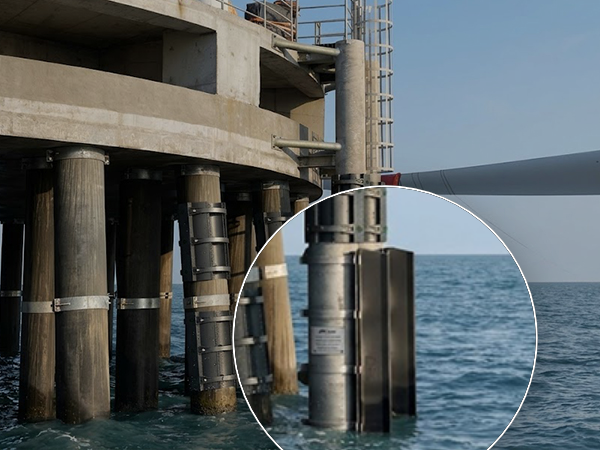
To address these challenges, we have introduced a dedicated Monopile Boat Landing Protection Fenders engineered specifically for harsh offshore environments. This system directly solves traditional pain points to ensure highly reliable berthing and O&M safety.
Core Material Analysis
The protection device features a hybrid composite structure combining a high-performance polyurethane (PU) elastomer with a 316L stainless steel framework. This engineered design seamlessly integrates the flexibility and wear resistance of polymer materials with the rigid structural support of specialty metals, delivering a heavy-duty protection solution built explicitly for harsh industrial and subsea marine environments.
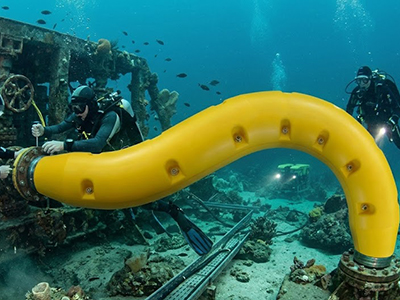
1. Protection Body: The entire split-sleeve outer shell is cast from high-performance polyurethane, boasting exceptional resistance to impact, abrasion, chemical exposure, and seawater aging. Acting as a heavy-duty "armor," it efficiently absorbs external mechanical impacts, cushions intense compressive forces, and safeguards internal conduits (such as subsea cables and flexible pipes) from wear caused by long-term friction.
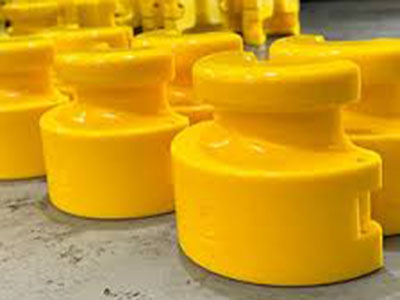
2. Plugs: Molded from the same high-performance polyurethane, these plugs seal specific technological ports, ensuring the integrity and seamless continuity of the overall protective barrier.
3. Internal Reinforcement Framework: A 316L stainless steel framework is pre-embedded within the polyurethane body. Serving as the "backbone" of the device, it provides rigid, heavy-duty support to the flexible polyurethane shell, ensuring the entire structure maintains its intended profile under high loads without collapsing or succumbing to excessive deformation.
4External Locking Hoops: Fabricated from 316L stainless steel, these external hoops securely clamp and lock the two split halves around the pipeline or cable. The outstanding resistance of 316L to pitting and crevice corrosion guarantees that the hoops remain completely rust-free, even in high-salinity marine environments or humid conditions.
"Sacrificial Anode" Cathodic Protection System
The steel fixtures of boat landing systems and their contact interfaces with the foundation are permanently exposed to the splash and tidal zones, enduring the most severe electrochemical corrosion in the marine environment. Once these critical metallic components rust through, the entire berthing and boarding protection system disintegrates.
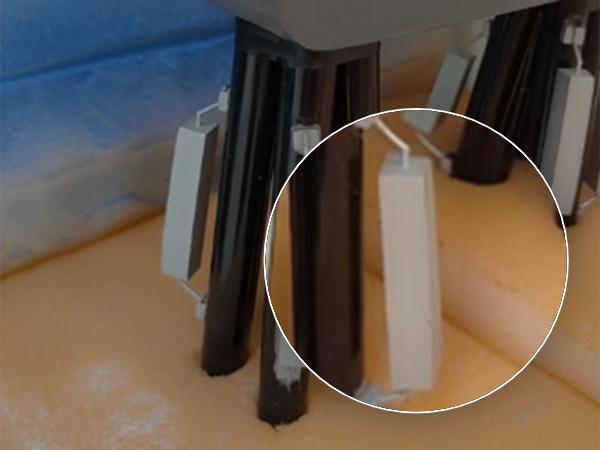
To thoroughly solve this pain point, we have integrated Sacrificial Anode Cathodic Protection Technology directly into the design of our Monopile Boat Landing Protection System:
1. Active Electrochemical Protecton: We strategically configure highly active aluminum or zinc alloy sacrificial anodes onto the protection system's metallic components or monopile mounting frames. Utilizing electrochemical principles, the anode oxidizes and dissolves preferentially, releasing electrons to provide 100% protection for the critical steel components of the protection system and the mating steel tubes of the monopile foundation against seawater corrosion.
2. Extended Monopile Asset Life: This active protection not only preserves the protection system itself but also acts as an additional "safety barrier" for the owner's main monopile foundation. Even under prolonged submersion and high-salinity salt spray conditions, the metallic fasteners remain pristine. This elevates the conventional "3-to-5-year replacement cycle" to an industrial standard of 10+ years of maintenance-free operation.
Conclusion
Our Monopile Boat Landing Protection Fenders System successfully upgrades offshore wind berthing protection from reactive maintenance to active life-cycle management. By offering an ultra-long lifespan, active corrosion prevention, and controllable safety, it delivers a definitive, value-driven solution that ensures asset preservation and comprehensive cost reduction. Contact us!