In offshore wind, oil & gas, and deep-sea dredging projects, subsea cables, umbilicals, and flexible hoses are constantly subjected to harsh marine environments. Ocean currents, wave actions, and structural movements create immense dynamic stress. Without proper safeguarding, these high-value assets are highly vulnerable to over-bending, fatigue, and catastrophic structural failure.
As a leading manufacturer of advanced marine engineering components, our Polyurethane (PU) Bend Restrictors are engineered to provide robust, interlocking mechanical protection, ensuring your subsea assets never exceed their Minimum Bend Radius (MBR).
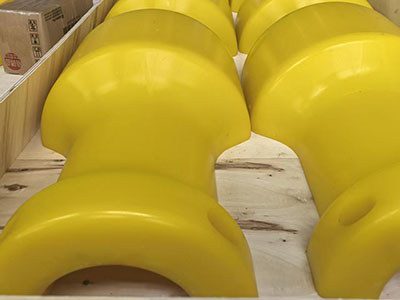
What is Subsea Bend Restrictors ?
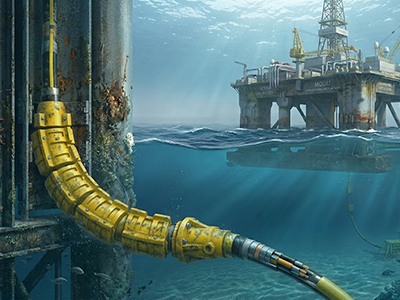
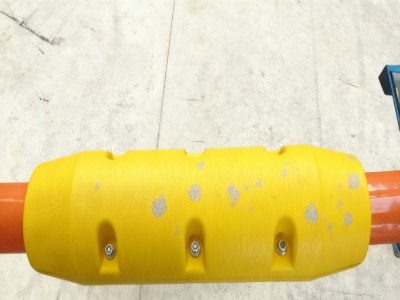
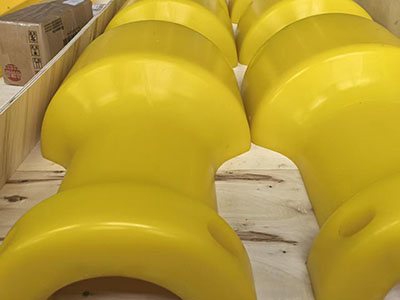
Our subsea bend restrictors feature a modular, split-pipe design consisting of a series of interlocking half-shell vertebrae. When wrapped around a subsea cable or flexible hose, these segments move freely within safe limits. However, once the pipeline bends to its pre-engineered limit, the vertebrae mechanically lock together, forming a rigid, radius-limiting spine.
Why Choose Polyurethane Bend Restrictors Over Steel?
Why do global marine contractors specify our polyurethane bend restrictors over traditional steel alternatives? The answer lies in the exceptional material science of premium industrial-grade polyurethane elastomers, which provide significant engineering advantages:
1. Corrosion-Proof Performance: Unlike traditional steel restrictors that are prone to severe rust and require complex, expensive cathodic protection, our polyurethane formula is naturally immune to marine hydrolysis and saltwater degradation.
2. Cable-Friendly & Elastic Contact: Rigid metal edges can easily gouge, scrape, or crush expensive cables and hoses during tension shifts. Our products feature smooth, micro-elastic contact surfaces that absorb impact and shield delicate cable and hose jackets from any mechanical scratches.
3. Optimized Negative Buoyancy: Heavy steel components generate high structural stress and tension on the cable-laying vessel. Our polyurethane restrictors are engineered with an optimized density that adds necessary stability on the seabed without dragging down the line with excessive dead weight.
4. Superior Wear & Abrasion Life: Traditional coatings on steel can scratch off, accelerating localized erosion. Polyurethane provides industry-leading abrasion resistance, maintaining its structural integrity despite constant friction from shifting seabed silt and sand currents.
Where Do You Need Critical Bend Protection?
1. Subsea Cable Protection: Safeguarding offshore wind power export/array cables at static or semi-dynamic transition zones.
2. Flexible Hose & Umbilical Safeguarding: Preventing over-bending at the seabed touchdown points (TDP) or connection interfaces.
3. Wellhead & Pipeline Crossings: Protecting infrastructure from localized structural strain during installation and long-term deployment.
Partner with Us for Your Next Subsea Project
Whether you need a custom solution for an offshore wind development or a rugged protection system for industrial subsea hoses, our engineering team is ready to deliver.
Why Choose Polyurethane (PU) Bend Restrictors and How Do They Work?
Urethane Bend Restrictor features excellent flow and wear resistance without deformation, it is maintenance-free and anti-corrosive for a long service life, while providing flexible, hydrolytically stable protection that saves cable armor from damage in deep-sea operations.