South Korea’s Ulsan 1.5 GW Floating Offshore Wind Farm
1. Project Background: The Deep-Sea Challenge
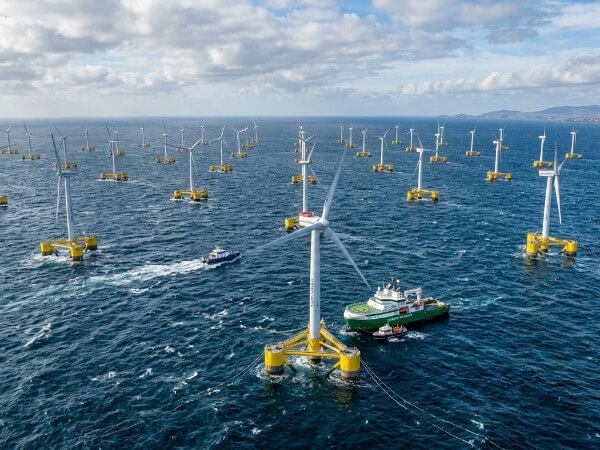
From 2025 to 2026, the waters 60-70 km off the coast of Ulsan, South Korea, have become the site for the world’s largest floating offshore wind cluster, with depths reaching 150-300 meters.
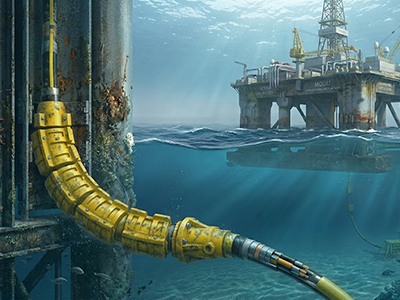
Unlike fixed-bottom foundations, floating wind platforms act like massive vessels on the sea surface. The Dynamic Cables connecting these turbines to subsea substations are no longer static; instead, they are suspended in the water column using complex "S-curve" or "Lazy Wave" configurations to accommodate continuous motion.
2. High-Frequency Fatigue & Extreme Environments
In the East Sea (Sea of Japan), dynamic cables are subjected to unprecedented mechanical stresses:
Continuous Motion: Driven by waves and currents, floating platforms can experience excursions exceeding 20 meters. This forces the cables to endure severe alternating bending, particularly near the hang-off points.
Extreme Typhoon Conditions: Frequent summer typhoons in South Korea drastically increase cable tension and bending rates, risking catastrophic mechanical damage to internal copper cores or fiber optics.
Material Degradation: Traditional static bend restrictors cannot withstand the millions of bending cycles required over a 25-year lifespan, often leading to material cracking or fatigue failure.
3. High-Performance Polyurethane Vertebrae Bend Restrictors (VBRs)
To mitigate these risks, the project has implemented advanced Vertebrae Bend Restrictors (VBR) systems:
Interlocking Mechanism: The VBR consists of multiple interlocking polyurethane segments. Once the cable reaches its Minimum Bend Radius (MBR), the segments lock together to prevent over-bending and potential failure.
High-Performance Polyurethane Formulation: Specifically engineered for Korean waters, our proprietary polyurethane compounds offer exceptional fatigue resistance. This material maintains superior elasticity and chemical stability even under high pressure and low temperatures at depths of 200 meters.
Dynamic Simulation & Validation: Utilizing Digital Twin technology, the system simulates cable trajectories during a "1-in-50-year" typhoon event, ensuring the precise load capacity for every VBR segment before deployment.
Consult with our technical experts today for a customized subsea cable protection solution tailored for the South Korean market. [Contact Us]