Offshore Wind Bend Stiffener in South Africa
South Africa is actively developing its abundant offshore wind energy resources, particularly along the West Coast. Subsea cables serve as the lifeline connecting offshore wind turbines to the onshore grid. In areas such as cable landing points, near turbine foundations, and on uneven seabeds, cables are subjected to complex dynamic bending stresses, vortex-induced vibrations, and external impacts such as fishing and anchoring.
Specific Challenges:
Harsh Sea Conditions: The South African West Coast is known for its wild seas, with strong waves, currents, and long-period swales imposing continuous fatigue loads on the cables.
Complex Seabed: Some landing sections feature rocky seabeds with little natural cushioning, making the cables prone to abrasion.
Environmental Requirements: Materials must be non-toxic, resistant to marine biofouling, and partially recyclable at the end of their lifecycle.
Solution: Polyurethane Bend Stiffener System
To address these challenges, the project moved away from traditional concrete mattresses or rigid steel structures and adopted an advanced modular polyurethane bend stiffener system.
Material Selection: High-performance marine-grade polyurethane elastomer was used.
Excellent Mechanical Properties: High elastic modulus provides the necessary bending stiffness while maintaining toughness to absorb impact energy.
Outstanding Environmental Resistance: Resistant to seawater corrosion, UV radiation (above water), salt spray, and with excellent hydrolysis stability—making it perfectly suited to South Africa’s marine environment.
Low Maintenance, Long Service Life: Designed to match the cable’s lifespan (>25 years) with no need for subsea maintenance.
Product Design and Function:
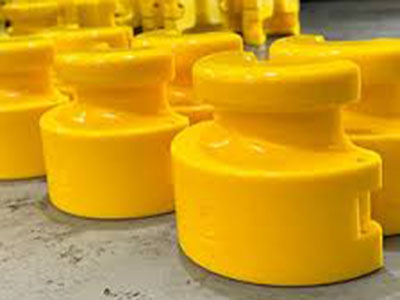
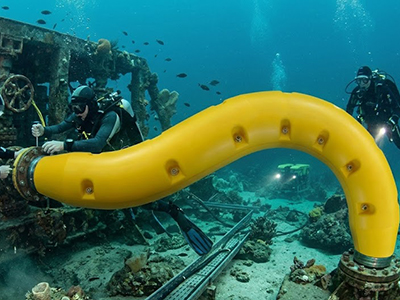
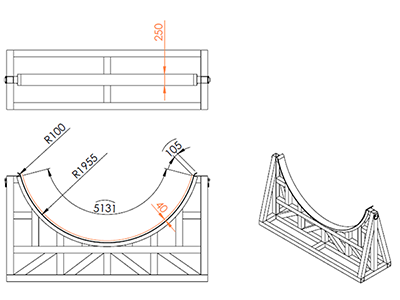
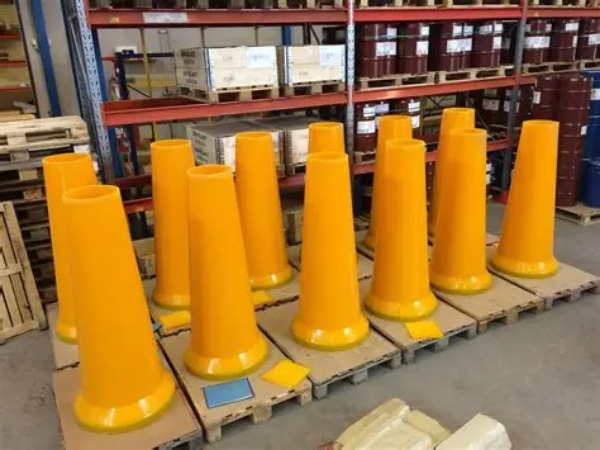
Function: The stiffener is a prefabricated rigid-flexible composite structure with a specific curvature radius. It is secured to the seabed with clamps, cradling the cable within its designed bending channel.
Core Role: It forcibly restricts the minimum bending radius of the subsea cable under dynamic loads, ensuring it does not fall below the cable’s allowable minimum bending radius, thereby preventing damage to internal fibers and conductors due to over-bending.
Additional Protection: The polyurethane shell provides mechanical protection for the cable against abrasion from rocks and external damage from fishing gear or anchors.
Implementation Results and Advantages
Significantly Enhanced Reliability: By precisely controlling the bending radius, the risk of cable failure due to over-bending under fatigue loads is eliminated, ensuring stable power transmission for the wind farm.
High Adaptability: Different base fixation solutions can be designed for various seabed terrains (rock, sand), offering far greater flexibility than concrete structures.
Cost-Effectiveness: Although the unit price of polyurethane material is higher, its lightweight nature significantly reduces transportation and installation costs, and its entire lifecycle requires no maintenance, resulting in lower total cost of ownership.
Environmental and Safety Benefits: The material meets marine environmental standards and poses no pollution risk. Its bright color also provides visual indication for subsea installations.
Conclusion and Insights
In South Africa—a country with demanding marine conditions and a strong commitment to developing renewable energy—the use of polyurethane bend stiffeners for subsea cable protection represents a successful case integrating high-performance engineering, localized collaboration, and cost-effectiveness. It not only addresses specific technical challenges but also demonstrates how advanced polymer materials can support the reliability and safe operation of South Africa’s critical energy infrastructure.
Stop Cable Fatigue Before It Starts. Our South Africa case study proves that the right material choice can reduce total cost of ownership while maximizing reliability. Let’s design a high-performance bend stiffener system tailored to your project's specific depth and load requirements.[Get a Free Project Evaluation Today]