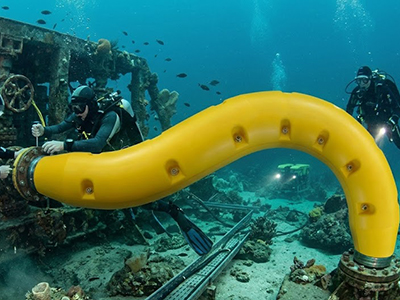
In deepwater oil and gas exploration and offshore wind power projects, flexible flowlines, umbilicals, and subsea cables act as the veins and nerves of the infrastructure. However, the connection points where these flexible lines meet rigid structures, such as offshore platforms or subsea wellheads, face immense mechanical challenges. Bend Stiffeners and their advanced connection systems have emerged as critical technical safeguards to address these risks.
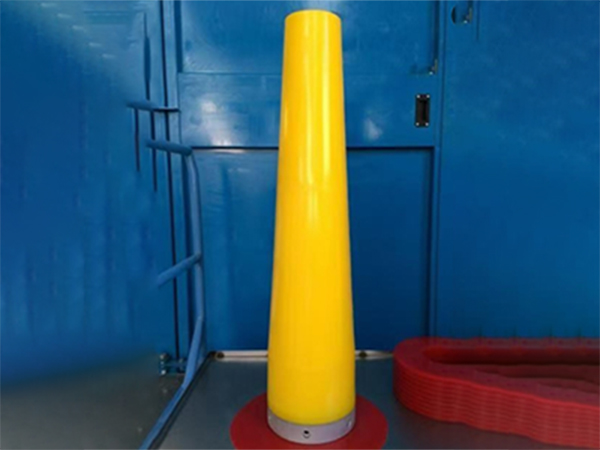
1. Core Function
Flexible pipelines are subject to frequent bending and displacement caused by waves, ocean currents, and the movement of floating vessels. If a pipeline were connected directly to a rigid structure, extreme stress concentrations would occur at the connection interface.
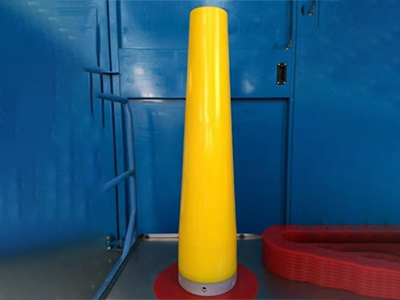
The primary role of a bend stiffener is to provide a smooth transition through its conical geometry and gradient stiffness:
Controlling Bend Radius: It ensures the pipeline never exceeds its Minimum Bend Radius (MBR) under any operating conditions, preventing structural failure.
Load Distribution: It dissipates concentrated bending loads over a longer section of the pipe, significantly reducing fatigue damage at the termination point.
2. Static vs. Dynamic: Targeted Protection Strategies
Based on the operational environment, bend stiffeners are categorized into two primary application modes:
Dynamic Applications: Primarily used in floating systems. These stiffeners must possess exceptional fatigue resistance to withstand millions of load cycles over a service life spanning several decades.
Static Applications: Typically used for fixed platforms or subsea connection points. Their main task is to act as a safety fuse against gross over-bending during the installation phase or during extreme weather events.
3. Materials
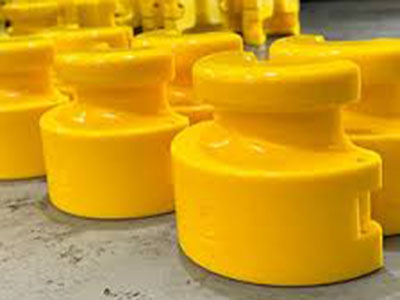
Bend stiffeners are typically molded from specially formulated high-performance polyurethane. The choice of material is vital, as it must simultaneously satisfy:
Environmental Durability: Resistance to seawater corrosion, marine growth, and significant temperature fluctuations.
Mechanical Stability: Excellent elastic memory and resistance to long-term creep.
Tailored Stiffness: Engineers adjust the chemical formulation to match specific project parameters, such as pipe stiffness, fluid temperature, and environmental load requirements.
While bend stiffeners may seem inconspicuous within a massive offshore complex, they are indispensable for the stable operation of subsea systems. Invest in durable, high-performance bend stiffeners to safeguard your subsea connections and extend the service life of your flexible pipelines and cables. Contact us!