Performance Showdown Between Vinyl & Polyurethane in Hose Bend Restrictors
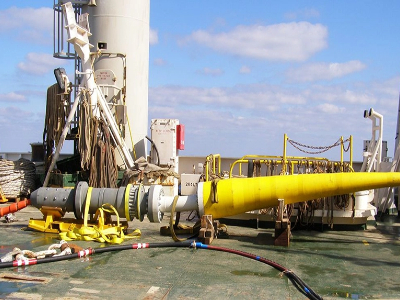
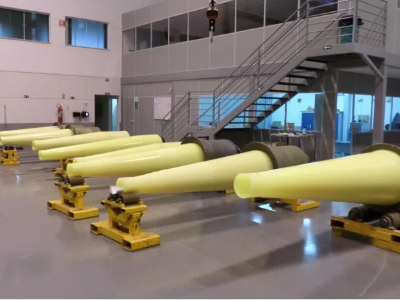
With the rapid development of global marine resource exploration and industries such as offshore wind power, the safety and durability of offshore engineering equipment are receiving unprecedented attention. Among the components, hose bend restrictors, which protect critical underwater hoses and cables from excessive bending damage, play a vital role in the long-term stable operation of the entire system. For a long time, Vinyl (PVC) has been a common choice in this field. However, in recent years, polyurethane materials have been quietly revolutionizing the industry with their outstanding performance.
Weather Resistance Challenge: The Severe Test of the Deep-Sea Environment
The offshore environment is complex, requiring materials to withstand long-term immersion in seawater, as well as exposure to UV rays, salt spray, temperature fluctuations, and microbial erosion.
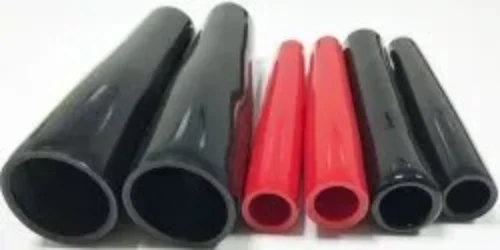
Traditional Vinyl (PVC): As a versatile plastic, Vinyl (PVC) offers good corrosion resistance and a certain degree of rigidity, with lower initial costs. However, under prolonged UV exposure, the plasticizers in Vinyl (PVC) tend to migrate and volatilize, causing the material to gradually harden, become brittle, and potentially crack. Its low-temperature toughness is relatively poor, posing a risk of brittleness in cold marine environments.
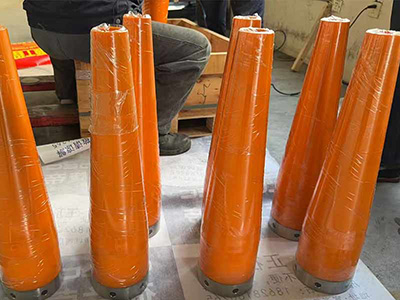
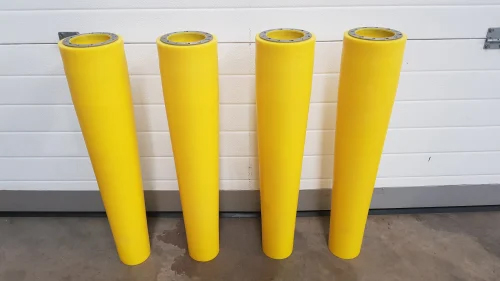
Polyurethane: Especially specialized polyurethane developed for marine engineering, its molecular structure grants it exceptional toughness and resistance to environmental stress cracking. Its tolerance to UV rays and ozone far exceeds that of standard Vinyl (PVC). It can maintain elasticity and strength across a wider temperature range (typically from -40°C to over 80°C), effectively resisting the hydrolytic aging caused by long-term seawater immersion.
Mechanical Performance Duel: Safeguarding Critical Connection Points
Hose bend restrictors must continuously provide flexible support and limitation under immense water flow impact, system sway, and their own weight, making mechanical performance crucial.
Limitations of Vinyl (PVC) : Vinyl (PVC) material is relatively hard, but its impact resistance and elastic recovery capability are relatively insufficient. Under long-term dynamic loads or accidental impact, PVC restrictors may undergo irreversible deformation or sudden brittle fracture, posing potential safety hazards. Their fatigue strength is limited, with performance degrading relatively quickly under continuous bending cycles.
Outstanding Performance of Polyurethane: Polyurethane is renowned as the king of wear resistance, with abrasion resistance often 5 to 10 times greater than most Vinyl (PVC) materials. This significantly protects against wear from seabed sand, gravel, and currents. Simultaneously, polyurethane boasts extremely high tensile strength and tear strength, along with excellent elastic memory (the ability to return to its original shape after deformation), allowing it to absorb more impact energy and provide longer-lasting, more reliable protection for hoses. Its high load-bearing capacity enables the design of lighter, yet stronger-performing products.
Economic and Environmental Perspective: Total Lifecycle Cost Analysis
Although the unit cost of polyurethane raw materials is typically higher than Vinyl (PVC), decision-makers in the offshore sector are shifting focus from initial cost to "total lifecycle cost.
Vinyl (PVC): Its main advantage lies in lower initial investment. However, considering its potentially shorter replacement cycles, higher maintenance frequency, and the risk of system downtime due to failure, the total long-term cost may increase.
Polyurethane: A longer service life means fewer replacement instances, significantly reducing maintenance costs and operational interruption risks. Its superior performance also enhances the safety margin of the entire pipeline system, minimizing expensive collateral losses caused by protective component failure. Furthermore, the durability of high-performance polyurethane aligns with the offshore industry's trend towards reducing waste and pursuing sustainable development.
In the offshore industry, which values strength and endurance, material selection is an investment in time and safety. Vinyl (PVC) has fulfilled its historical role with its cost-effectiveness, while polyurethane is redefining the reliability standards for hose bend restrictors with its comprehensive performance advantages. This comparison between materials is not merely a contest of performance data; it is a microcosm of the offshore engineering sector advancing towards a safer, more efficient, and more sustainable future.